-article_image.jpg&w=1920&q=75)
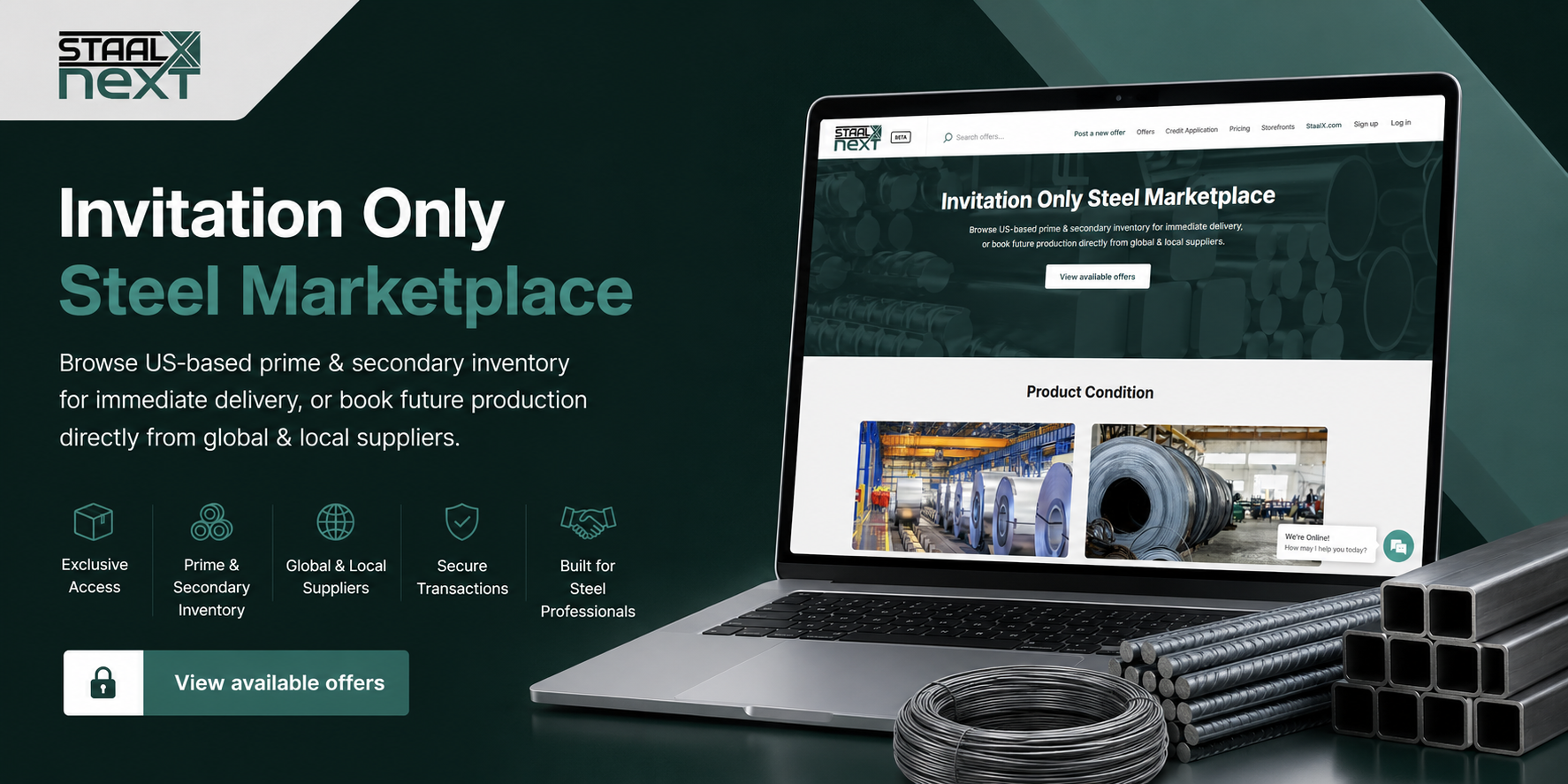 Check it out at next.staalx.com or contact us at websupport@staalx.com for more information. Updates From This Week Have Steel Prices Finally Topped Out?A quiet week for flat-rolled pricing hikes, rising import alerts, and structural shifts signal the potential end of the six-month long products rally. The sizzling upward momentum that defined the first half of 2026 has officially encountered a wall. After months of navigating aggressive price hikes and geopolitical panic stemming from the Middle East conflict, the US steel long products market is settling into a quiet period of summer doldrums. Across the board, transaction levels have flattened out, buyers are retreating to the sidelines, and a distinct air of caution has replaced the frantic booking frenzies of the spring. The burning question on everyone’s mind is clear: Have we finally hit the absolute ceiling of this cycle? The signs suggest the rally is topping out. Rebar: East Coast Softness and the Tech Speed Bump On the rebar front, the frantic domestic supply scramble has mostly dissipated. The East Coast market is feeling a bit softer right now, primarily driven by two newly injected supply-side elements: The aggressive market entry of Arkansas newcomer Hybar paired with the ramp-up of Nucor Lexington has finally given the domestic grid the supply padding it lacked earlier. Furthermore, decent-sized shipments of South Korea rebar have continuously landed over the past five months, providing a vital temporary supply cushion. However, these Korean arrivals are poised to slow down significantly after August. Virtually nothing big has been booked internationally since the beginning of the Iran conflict, and the remaining shipments currently on the water are running quite late. Compounding the localized price softness is a cooling on the consumption side. The primary engine of long products—data center construction—is hitting unexpected roadblocks, slowing down noticeably due to intensifying community pushback over power and water consumption, grid strain, and zoning. With this consumption pillar taking a breather, rebar pricing trends have flattened into a neutral holding pattern. Wire Rod: Safety Stocks Secured and Dwindling Shortages The wire rod sector is singing a similar tune of quiet stability. The supply anxiety that sent transactions spiking earlier this spring has faded. Today, domestic mills are doing a commendable job keeping up with customer demand, and there is no real shortage to speak of. Most major import buyers are remarkably well-booked into late Q3. Having isolated their risks early on by securing alternative tons, they have little appetite to pursue new trades. As a result, wire rod pricing trends have also turned entirely neutral. Flat-Rolled Peak and the Red Flags from Big Steel The most telling indicator of a structural market peak comes from the flat-rolled sector, which historically acts as a bellwether for the broader long products market. After a relentless six-month march upward, hot-rolled coil prices didn’t show an increase last week. Adding fuel to the bearish sentiment, Nucor has put out a warning stating that they are actively monitoring import levels, which have inevitably been increasing. Many flat rolled buyers think HRC has finally reached its peak. The long products market has successfully transitioned from an aggressive seller’s paradise to a balanced plateau. While a dramatic crash isn't in the cards due to empty import order books for the late fall and a still very decent construction activity, the upward pricing engine is running out of fuel. Weekly Poll What's your outlook for steel prices over the next 60 days? From our content partner, SteelOrbis .jpeg) US domestic long steel prices flat though lower energy may offer limited relief Thursday, 25 June 2026 22:05:21 (GMT+3) San Diego US rebar and wire rod markets remained stable again this week, though declining global energy prices as a result of reduced Mideast tensions with Iran might offer some price relief soon, insiders told SteelOrbis this week. Following the June 18 signing of an interim memorandum of understanding (MOU) between the US and Iran, calling for a 60-day cessation of hostilities to hammer out a more permanent peace deal, global oil prices retreated on June 25 to levels unseen since the Mideast conflict began on February 28. US benchmark West Texas Intermediate crude (WTI) traded at $70.50-70.95 per barrel (/bbl), while global Brent crude oil traded between $72.00-74.50/bbl. Domestic steel suppliers recently have increased the delivered price of long steel and other finished steel products because of higher diesel fuel prices inspired by the ongoing Iran conflict. On news that the Strait of Hormuz was closed, restricting access to about 20 percent of global oil supply, oil prices spiked to more than $118/bbl in the days following the start of hostilities, with steel importers and commodity shippers later announcing substantial freight and fuel surcharges to cover increased fixed costs to customers. And while long steel imports into the US remain low as a result of Section 232 steel tariffs, many import suppliers choose the much more expensive option of diverting shipping around the contested strait in order to safely supply customers here and abroad. “Domestic producers have largely held pricing steady as supply and demand remain balanced,” said one US Gulf Coast based steel insider. “Elevated freight costs, stable scrap expectations and a relatively narrow spread between domestic and import offers continues to support current price levels,” He continued, “The market remains orderly with little incentive for aggressive discounting by the mills.” In the domestic rebar market, Midwest rebar on an FOB mill basis remained steady for a sixth week at $47.00-48.00/cwt. ($940-960/nt or $1,036-1,058/mt), up from $46.00-47.00/cwt., ($920-940/nt or $1,014-1,036/mt) earlier. Long steel importers report rebar pricing on the US Gulf Coast for September delivery near parity with recent domestic sales at $49.00-$50.00/cwt., however, longer lead times and continued market uncertainty continues to give domestic steel producers and edge over scant imports in week-to-week spot trade, they said. And even as US mills continue to produce more supply to cover increased data center and infrastructure-related steel requirements, local supplies remain tight for truckload quantity tonnage, especially in the Midwest, insiders added. On the US construction front, media reports indicate rising construction input costs remain one of the key challenges for the US construction industry with prices said to have risen again during April and May largely due to elevated energy costs and tariffs. Regardless of the higher pricing, which some estimate has increased by 4-7 percent since the beginning of the year, construction backlog was reported to have reached a 10-month high during April. US import long steel prices decline amid reports of more imports at US Gulf Coast Wednesday, 01 July 2026 00:15:01 (GMT+3) San Diego Import long steel prices continued lower this week amid new reports that import deliveries, mostly from Asian nations, were expected to continue to rise at US Gulf Coast ports, challenging recent market share gained by domestic steel suppliers, market insiders told SteelOrbis. “Import inventories in Houston (Texas) seem really high at the moment due to a glut of new arrivals,” reported one US Gulf Coast long steel insider to SteelOrbis. “While markets remained pretty quiet ahead of the US July 4 holiday, import long steel prices are a bit lower overall.” Recently, Section 232 steel import tariffs of 50 percent, high energy pricing as a result of the US-Iran war, and extended global steel production and delivery lead times, have reduced the competitiveness of global finished steel imports, giving a recent edge to domestic US steel producers. Seasonal demand declines in Asia and currency issues in Turkish and other global steel markets combined with lower global scrap prices has increased the affordability of imports to more workable levels, insiders said. “The markets are quiet pre (July 4) holiday, and rebar demand is considerably down this week,’ said another US Gulf Coast steel importer. “The market sentiment is starting to turn slightly bearish, with prices going soft sideways due to dirty cheap import (rebar) from Korea.” He continued, “It looks like about 400,000 tons of material has entered or is about to enter the US by the end of June. The landed US cost of rebar is so low right now because they have obviously dumped rebar into the US.” Another import insider had a slightly different take on recent reports of increased Korean imports. “Korean shipments have been very late recently by not arriving on their promised dates,” he said. “We saw some increased imports during May and June, but we’re likely to see even more imports come in this month and into August. Then, we’ll likely see imports taper off toward the end of the year as US demand dries up a bit going into the 4th quarter.” At the US Gulf Coast, import rebar on a loaded truck basis is reported at on average another $10/nt lower at $45.00-46.00/cwt., ($900-920/nt or $992-1,014/mt), off from $45.50-46.50/cwt., ($910-930/nt or $1,003-1,025/mt), one week prior. Spot pricing for US East Coast import rebar also was assessed an additional $0.50/cwt., less at on average $45.50-46.50/cwt., ($910-930/nt or $1,003-1,025/mt), off from $46.00-47.00/cwt., ($920-940/nt or $1,014-1,035/mt) seven days earlier. In the import wire rod market, delivered pricing continued lower on reports of additional import supplies made available on a DDP loaded truck basis from “hungry Asian mills” at $47.50-49.50/nt ($950-990/nt or $1,047-1,091/mt), off from $48.00-50.00/cwt., ($950-980/nt or $1,047-1,080/mt) one week ago. Traders said a second week of softness in wire rod markets could continue near term as additional supplies begin to be made available from various “wild card” suppliers from Indonesia and other Asian nations such as Korea and Vietnam, regardless of ongoing anti dumping cases. USWC export scrap market remains bearish as bulk prices to docks fall Wednesday, 01 July 2026 22:15:18 (GMT+3) San Diego Bulk scrap prices to the US West Coast (USWC) docks fell by $10/gt in California on Wednesday following announcements made last week by exporters warning of a $10-20/gt price decrease in the coming two weeks. It remains to be seen if the rest of those announced price contractions will be implemented too. The price movements come after a relatively prolonged softness in the Asian scrap import market. Prices for HMS I in bulk fell on Wednesday by $10/gt to $240-250/gt delivered export yard, P&S 5ft contracted by the same amount to $260/gt delivered, and shredder feed decreased by the same amount to $190-200/gt delivered. San Francisco Bay Area scrap prices also fell by $10/gt and sit $5/gt below their Los Angeles counterparts. In Houston, contacts reported another week unchanged but feel that exporters will not be able to hold off the sideways trend much longer, even with strong buying prices dominating the domestic market in the region. In the meantime, HMS I still sits at $340-345/gt delivered Houston export yard, P&S 5ft unchanged at $350-360/gt delivered, and shredder feed sideways at $310-330/gt delivered. A host of factors have affected the Asian scrap import market, with some factors more predominant than others. The rainy season has been prominent as a factor in the Taiwanese and Vietnamese markets, with construction activity and rebar demand being affected. In Pakistan, domestic steel demand has also suffered, putting pressure on domestic scrap and rebar prices; additionally, as SteelOrbis reported , there is expectations that UAE supplies could return to normal levels and place downward pressure on the market. Bulk scrap prices in the Pacific Northwest (PNW) also remained unchanged this week with HMS I at $290/gt delivered Portland-Tacoma export yard, P&S 5ft at $300/gt delivered, and shredder feed at $225-236/gt delivered. Containerized The bearish trend coming from Asia was expected to further depress containerized scrap prices from the USWC, and indeed they fell for the fifth consecutive week. Confirmations have been scarce, but they have started to roll out regarding the price of HMS I/II 80:20 falling by $5-8/mt to $320/mt FAS Long Beach port, some contacts report that they believe that to be the level but have yet to confirm actual deals. Some uncertainty abounds, relatively speaking, as all contacts in the market recognize that the prevailing trend is negative. Still, for containerized P&S 5ft some reported selling on Monday at $350/mt FAS Long Beach port, while others mention that the price for the grade has dropped to $335-340/mt FAS port. Shredded fell by $5/mt to $340-345/mt FAS port. Do you have any questions? Check out our FAQ!Check out the most frequently asked questions about the service and products of StaalX. We are always here to chat with you in the chat boxes from the site or on the support telephone number below. Contact us websupport@staalx.com or +1 (708) 697-3227 Follow StaalX on |








Need steel? Get an instant quote & save $500 off your first order
Search rebar, wire rod, wire mesh and more on StaalX. Check availability and book reliable delivery nationwide.
For sponsorship opportunities or advertising on StaalX News, contact us at websupport@staalx.com.