| | | |
Domestic Prices Stable for Now
|
|
The domestic steel market is holding steady, but import volumes have plummeted across key product lines.
Domestic Pricing Holds Amid Scrap Stability
Supported by stable scrap pricing, domestic mills closed out September without announcing any official price increases. This stability was signaled early on when Nucor announced no price changes for wire rod. A "no change" announcement, while rare, helped to calm wire drawers and allowed the market to switch to a cruising speed. Wire rod mills are currently busy and cautious about committing to long-term contracts, skillfully navigating customer angst while maintaining a disciplined approach.
Wire Rod: Imports Hit the Floor
Wire rod imports plummeted to just 30,000 metric tons in September, a massive drop from the previous 12-month average of 94,000 metric tons. Low import numbers are expected to continue at least through the end of the year.
Will imports return in a meaningful way? That depends entirely on how the economy and wire consumption develop into 2026. Right now, demand and sales are down across the board, with inventories remaining high. Liberty Steel is revamping production, and its success could help fill the supply gap left by lower imports. However, if the steel and wire industry adapts to the "new normal" and shifts back into inventory replenishment mode, shortages are likely. While near-shore supply from Canada and Mexico can partially offset this, it may not be enough if 2026 proves to be a year of strong demand growth.
Rebar: Struggling to Meet Existing Demand
On the rebar side, only about 10,000 metric tons of imports entered in September, compared to a 12-month average of 75,000 metric tons per month. Contrary to wire rod, rebar mills are struggling to keep up with existing demand. Although new mill production is on the way, it will not have a full market impact until late Q4 or Q1 of next year. Mills could easily implement another price bump but have so far avoided doing so—perhaps to keep imports at bay and maintain customer relationships.
Flat Rolled Products Remain Soft
While long products appear strong, flat rolled products have struggled to gain any price increase since import tariffs were raised to 50% in June. Normally, one would expect rapid increases for hot rolled, cold rolled, and coated products. Instead, prices have stagnated and remained soft. This is likely due to high inventories and new domestic flat rolled steel-making capacity.
The persistent issue is demand. Even for tin mill products, which have extremely limited domestic production, prices have not yet risen. All expectations point toward a flat rolled price increase, perhaps a strong one, once inventories are drawn down. If not, it will be a significant indicator of how severe the demand problem truly is.
Q4: The Fact-Finding Quarter
The last quarter of 2025 will be a fact-finding quarter for sure. The entire steel-consuming industry is currently not feeling optimistic. However, as we all adapt to the "new normal" brought about by recent economic and domestic policies, the uncertainty that has caused market inaction may subside. This adaptation could pave the way for getting back to work and making 2026 a strong year.
|
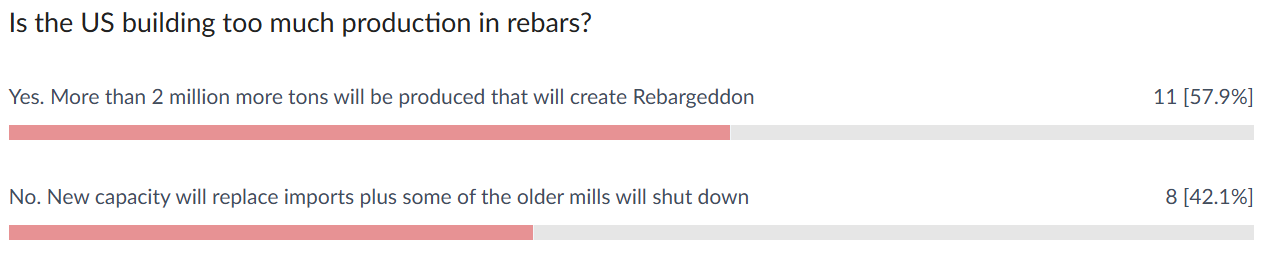
| | | Will Q4 2025 mark the start of a recovery or more stagnation in the steel market? |
| | | | |
Stop Leaving Money on the Table: The Smarter Way to Buy Steel is Here
In the world of construction, fabrication and manufacturing, profit margins are won and lost on material costs. For years, the process of procuring steel has been a complex dance of phone calls, opaque pricing, and a supply chain that adds costs at every step. Every dollar you overspend on rebar, wire mesh, or wire rod is a dollar taken directly from your bottom line. |
|
|
|
Business owners have a vested interest in buying better. But "better" doesn't just mean cheaper; it means smarter, faster, and more transparent. What if you could access top-tier pricing from master sellers without sacrificing service or quality?
That's why we built StaalX.
The StaalX Advantage: Direct Savings, Direct to Your Profit Line
StaalX is a revolutionary online marketplace designed for one purpose: to make steel procurement more competitive. We connect you directly with the master sellers of rebar, wire mesh, and wire rod, cutting out the unnecessary layers of distribution that inflate your costs.
Our market analysis reveals a powerful truth: by leveraging the direct-from-source pricing on our platform, buyers can save an average of 8-15% on their steel purchases.
Consider the impact: On a $100,000 rebar order, that’s a direct saving of $8,000 to $15,000. On a $500,000 project, you could be adding up to $75,000 straight back into your business.
This isn't just a discount; it's a fundamental shift in how you acquire materials. It’s the difference between a good quarter and a great one.
More Than Just Price: A New Venue for Competitive Buying
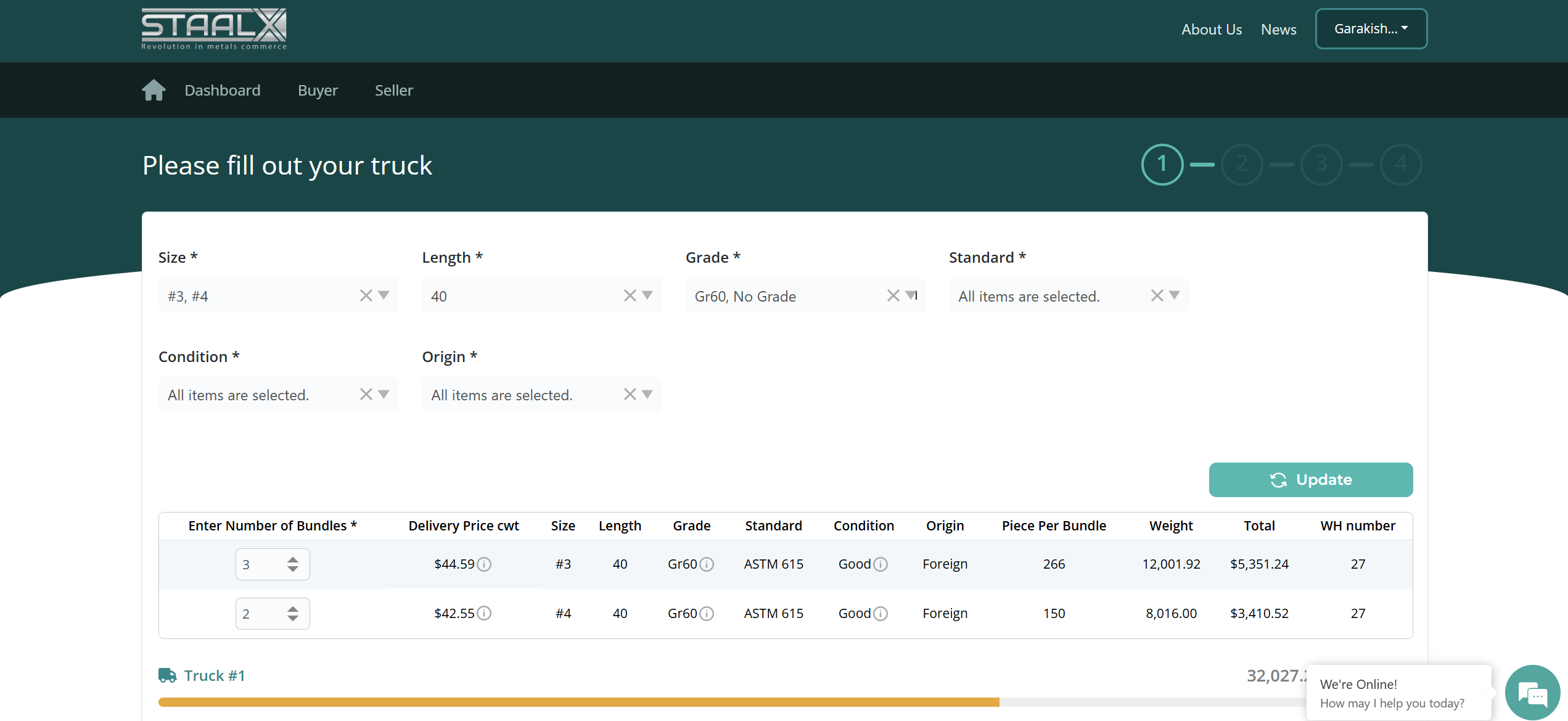
While price competitiveness is our core advantage, StaalX provides a new venue for you to buy more efficiently without sacrificing service. Our platform offers: Unmatched Transparency: See prices from multiple vetted sellers in one place. Time Efficiency: Stop wasting hours on the phone chasing quotes. Find what you need, compare, and connect in minutes. Price Volatility Management: In a fluctuating market, knowledge is power. We invite you to check our platform, build a shopping cart with your typical order, and save it. You'll receive regular weekly pricing updates, allowing you to track the market and buy at the optimal time.
It's Time to Buy BetterDon't let legacy purchasing habits erode your hard-earned profits. The opportunity to significantly enhance your profitability is here.
We invite you to visit StaalX today. Explore the listings for rebar, wire mesh, and wire rod. Save a cart to see firsthand how our weekly pricing updates can empower your purchasing strategy. Give StaalX a chance, and see how much you can save.
We look forward to seeing you soon! Murat Askin
|
| |
🚚 Smarter Steel Sourcing Starts with StaalX |
|
Less imports. More uncertainty. Smarter sourcing is a must.
Steel buyers today face collapsing import volumes, cautious mills, and unpredictable timelines.
StaalX helps you stay ahead with modern tools built for this moment:
✅ Live domestic & import inventory – Know what’s actually available, not just promised.
🚛 Real-time freight quotes – No more chasing carriers. See landed costs instantly.
💳 Flexible payment terms – Adapt to the market while protecting your cash flow.
🔍 Search efficiently
📦 Quote faster
📈 Build confidently
👉 See what smart sourcing looks like at www.staalx.com
Rebar. Wire Rod. Mesh. Steel made simple. |
| | | | | From our content partner, SteelOrbis |
| | US import long steel prices still flat with low demand even as September imports plunge
Thursday, 25 September 2025 20:43:26 (GMT+3) San Diego |
| US import rebar and wire rod prices were mostly flat again this week amid limited mid-month domestic demand, even as preliminary import data suggests monthly rebar and wire rod imports from abroad may have plunged during the first part of September, market insiders told SteelOrbis this week.
While end-of month import data remains unavailable for yet another week, preliminary data from the Washington, D.C.-based International Trade Administration (ITA) shows September rebar imports plunged to a mere 8,967 mt, off from on average 60,000-70,000 tons per month, insiders said, while wire rod imports lagged at 21,936 mt, off from on average 80,000-90,000 tons per month. During August, 2025, ITA import data reported end-month rebar imports of 57,812 mt, while wire rod imports amounted to 91,331 mt.
In the rebar pricing segment, import rebar on a loaded truck basis on the US Gulf Coast is discussed unchanged at $43.00-45/cwt., ($860-900/nt or $948-992/mt), depending on the size of the customer, with most transactions averaging steady at $44.50/cwt. ($890/nt or $981/mt). While pricing remained stable for yet another week, insiders say another potential rebar price increase from domestic mills might be forthcoming. “The rebar pricing offers we saw recently at $41.00/cwt., seem to be disappearing,” the importer said a week earlier. “Even though the markets remain sluggish and prices remain flat.”
On the US East Coast, import rebar maintains its slight premium to the US Gulf Coast at $43-46/cwt., owing to reduced August imports, with the weekly SteelOrbis average steady at $45.00/cwt., ($900/nt or $992/mt). Importers said lower August imports are the primary reason for the East Coast price premium over the Gulf Coast.
Since steel import tariffs of 50 percent went into effect in June for the US’ primary suppliers Canada and Mexico, insiders tell SteelOrbis that domestic long steel supply, especially specific rebar sizes, has remained more limited. Wire rod supply has only recently been increasing as Peoria, Illinois-based Liberty Steel continues to ramp up production.
“Imports are looking quite a bit lower for September due largely to the ongoing tariffs,” said one Gulf Coast long steel importer. “While the month isn’t yet over yet, if September continues along this trajectory, we’re expecting to see a significant decreases for long steel imports.”
“Prices held steady for a third straight week,” remarked another Gulf Coast importer to SteelOrbis. “Tight supply remains the main (price) driver,” he said. “Mills across the Midwest, South, and East are basically sold out, forcing some fabricators to trade among themselves just to cover jobs. This scarcity gives suppliers leverage.”
This week’s import long steel assessment differs little from a week earlier when market participants reported a general tightening of domestic rebar supply, with little relief seen until Q1 2026 when importers said they could resume the movement of import tonnages into the US from abroad. At present, importers tell SteelOrbis limited supplies of rebar and to a lesser extent wire rod are available on the US Gulf Coast from Vietnam and Egypt, though those supplies “could dry up soon too.”
The insider said he continues to hear “lukewarm demand” projections for Asian long steel arrivals in early 2026.
“In early 2026, if (demand) unexpectedly picks up, some of the domestic mills could struggle meeting supply requirements,” the Gulf Coast insider said. “But, mostly we’re hearing that this might be wishful thinking on the part of suppliers, as everyone was saying earlier this year that the second half of 2025 would be better for demand.”
In the import wire rod segment, insiders said a combination of low domestic demand and increasing supply as domestic supplier Liberty Steel continues to ramp up local wire rod production, leaves little room for imports to challenge domestic suppliers. And, with domestic supply priced on average little changed at $47/cwt., ($940/nt or $1,036/mt), current US Gulf Coast imports quotes at $42.75-45.00/cwt., remain largely unattractive.
“There’s really not many people looking for wire rods at the moment,” the importer said. “Lukewarm demand is seen for the earliest January arrivals into the US from Asia.”
|
| US domestic rebar and wire rod flat again for eighth week as demand flags
Thursday, 25 September 2025 19:34:55 (GMT+3) San Diego |
| US domestic rebar and wire rod prices were flat for an eighth straight week amid continued limited spot market demand and a growing outlook for sideways to lower scrap pricing during the month of October, market insiders told SteelOrbis.
Market respondents said the June doubling of Section 232 import tariffs to 50 percent was continuing to slash imports from abroad at a time when domestic demand remains low because of limited steel requirements from the US manufacturing and construction sectors of the economy. Recent quarter-point interest rate cuts from the US Federal Reserve had little effect on the markets as they were largely already factored into pricing, they said.
In the weekly rebar spot markets, domestic supply on an FOB mill basis was assessed with most transactions noted at $44.50-45.50/cwt, ($890-910/nt or $981-1,003/mt), on average $45.00/cwt, ($900/nt or $992/mt), unchanged from seven days ago. Insiders say as imports lag, some domestic rebar mills are having a harder time keeping up with orders, so mills could be poised to announce another round of further price increases soon.
"While the month is not over yet, if September (imports) close at this trajectory, it will be quite a significant decrease compared to other months,” one US Gulf Coast long steel importer explained.
According to the Washington, D.C.-based International Trade Administration’s (ITA) US Steel Import Monitor, US imports of rebar and wire rod were much lower this month as well. The ITA preliminarily reported 8,967 mt for rebar and 21,936 mt for wire rod for September.
In the domestic wire rod market, domestic supply on an FOB mill basis was assessed with most transactions reported this week at $46.50-47.50/cwt ($930-950/nt or $1,025-1,047/mt), or an average of $47.00/cwt ($940/nt or $1,036/mt), unchanged from seven days ago.
“Liberty Steel is not 100 percent, but the company is doing well,” according to a SteelOrbis insider.
|
| October US scrap seen sideways to $20/gt down on reduced mill demand, trimmed US exports
Friday, 26 September 2025 01:22:56 (GMT+3) San Diego |
| US scrap pricing for October is seen sideways to $20/gt lower as a result of expectations for lower outage-related scrap purchases by domestic mills next month and because scrap export data from SteelOrbis reveals Turkish and other scrap buyers have reduced their appetite for US scrap as global steel demand wanes and tariffs continue to challenge profitability metrics.
The weekly scrap expectation results differ little from those reported seven days ago when most scrap survey respondents said October pricing could be sideways to down without citing a price level for primes, citing many of the same reasons reported this week.
“We are hearing sideways (pricing to September) for cuts and shreds, while potentially down on primes again, given continued excess prime scrap in the market,” said one US Midwest scrap insider. “The majority of the discussions in scrap market circles seems to be negative to the tune of $20/gt or so on primes for October,” another scrap insider said. “I believe its the effect of outages on demand at mills coupled with a very poor export market that is contributing to the (price outlook) negativity.”
According to monthly customs data collected by SteelOrbis, through the first seven months of 2025, exports of ferrous scrap to Turkey alone fell by nearly 19 percent from the equivalent period one year earlier.
Insiders predict domestic steel demand will continue to wane because historically, during the period from September through November, US mills perform annual maintenance operations, reducing their scrap requirements as plants are shuttered. Overseas, insiders tell SteelOrbis export ex-US scrap buying from Turkish mills could remain reduced, though insiders report that during ongoing October negotiations -which are nearly complete- Turkey’s import scrap prices have found some fundamental support from the cost and supply side, though no sharp movements in prices are expected short term.
One scrap insider told SteelOrbis the new market call for a $20 decline similar to one seen for primes during September supply negotiations, could exert downward pressure on other scrap grades as well, especially given low levels of domestic demand and lower exports.
“We’re hearing very soft sideways if sideways at all,” said still another US Gulf Coast mill-based scrap buyer. “I am hearing $20 down on primes, which puts pressure on shreds at $10-20 down,” he added. “Cuts might maybe follow shreds or stay sideways if there is no move to the downside.”
The insider remarked that overall domestic scrap supply remains more than adequate in his Gulf Coast region given recent low demand requirements from mills and amid reports that scrap exports might continue to slip.
“I’m already getting additional (HMS and P&S) barge offers for October that have not been offered in prior months,” he added.
During the recent September monthly buy-cycle negotiations, US scrap grades -with the exception of prime scrap grades- settled sideways for a fourth month. Prime grades only, settled $20/gt lower as a result of reports of plentiful busheling inventories at mills and continued low demand expectations, market insiders told SteelOrbis.
Based on a predominant October sideways to $20/gt decline expected for prime scrap grades, US Midwest prime busheling scrap in the Ohio Valley could settle at $395-420/gt ($403-428/mt), while shredded scrap could settle flat to September at $375-380/gt ($381-387/mt). Ohio Valley P&S and HMS grades could trade flat for a fifth month at $361-371/gt ($367-377/mt) and $325-345/gt ($330-387/mt), respectively, SteelOrbis monthly scrap data shows.
In the US Northeast, prime busheling grade material could dip $20/gt to $340-360/gt ($347-367/mt), while shredded grades are seen flat again to September at $325-335/gt ($330-342/mt). P&S and HMS grades could likely finish sideways at $295-305/gt ($300-310/mt) and 305-320/gt ($310-325/mt), respectively, to September settles, scrap insiders told SteelOrbis.
|
| |
Do you have any questions? Check out our FAQ! |
| Check out the most frequently asked questions about the service and products of StaalX. We are always here to chat with you in the chat boxes from the site or on the support telephone number below.
|
| | | Contact us websupport@staalx.com or +1 (708) 697-3227
Follow StaalX on
|
| |
|
|
| |


-article_image.jpg&w=1920&q=75)

.jpeg)